‘A sharp phrygian’ is the 3rd mode of the F# major scale. The notes in A# Phrygian are:
A# – B – C# – D# – E# – F# – G#
The phrygian mode has a dark sound, which can be used over minor chords to create interesting and exotic musical ideas.
If you have read the post on understanding the phrygian mode, you will know that the phrygian mode contains a ‘flat 2’, a ‘flat 3’, a ‘flat 6’ and a ‘flat 7’ (parallel approach).
You will also know that it is the 3rd mode of a major scale (derivative approach). Let’s briefly look at how to construct A# Phrygian using both the parallel approach and the derivative approach.
A# Phrygian Mode Using The Parallel Approach
A sharp major scale has the following notes:
A# – B# – Cx – D# – E# – Fx – Gx
If we ‘flatten’ the 2nd note (B#), the 3rd note (Cx), the 6th note (Fx) and the 7th note (Gx) we get the following:
A# – B – C# – D# – E# – F# – G#
A# Phrygian Mode Using The Derivative Approach
A is the 3rd note of the F sharp major scale:
F# – G# – A#- B – C# – D# – E#
If we play the F# major scale and start on the 3rd note we get the following:
A# – B – C# – D# – E# – F# – G#
Let’s look at the A# phrygian mode in the different positions on the guitar fretboard:
A# Phrygian in the Open Position
Firstly, let’s look at the open position:

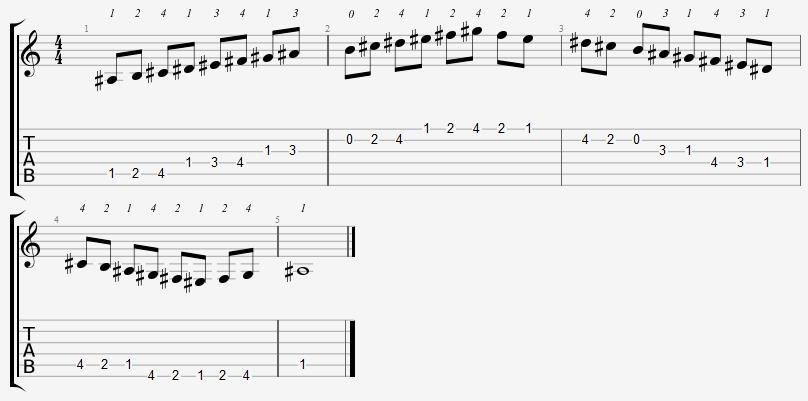
A# Phrygian CAGED Positions
Now let’s look at A# phrygian in the 5 different CAGED positions along the fretboard.
A# Phrygian in the 1st Position (Lowest Fret is 1)

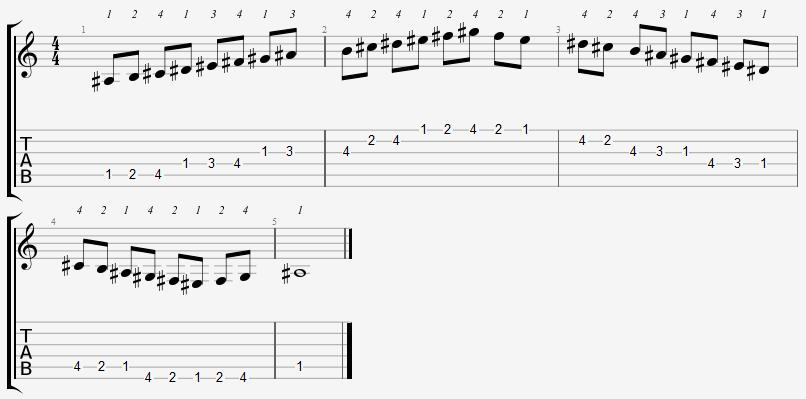
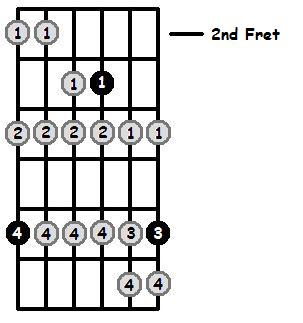
A# Phrygian in the 2nd Position (Lowest Fret is 2)
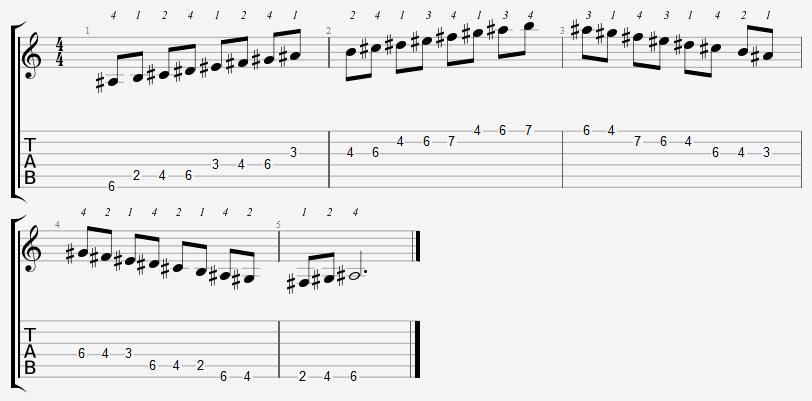
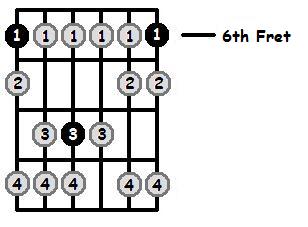
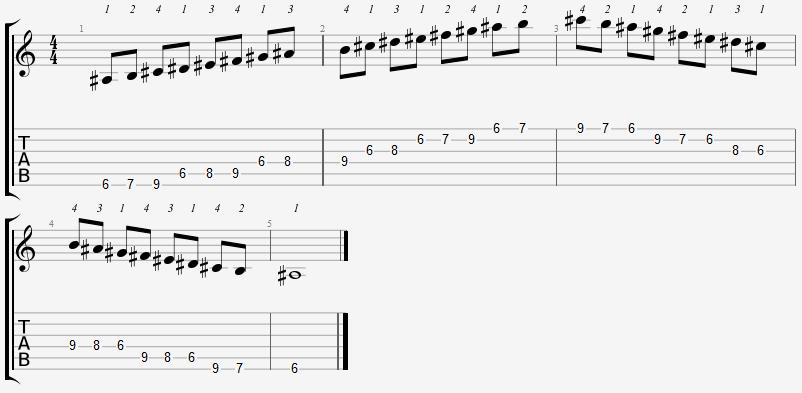
A# Phrygian in the 6th Position (Lowest Fret is 6)
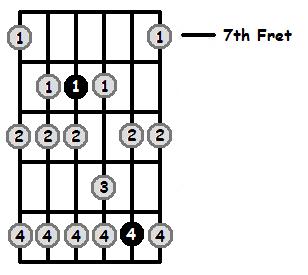
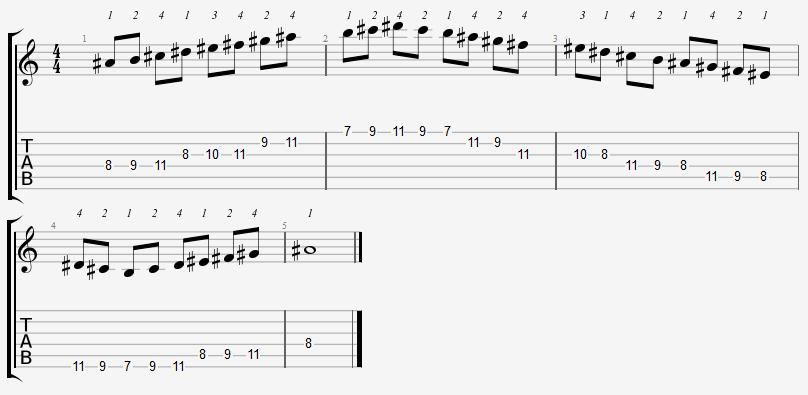
A# Phrygian in the 7th Position (Lowest Fret is 7)
A# Phrygian in the 10th Position (Lowest Fret is 10)
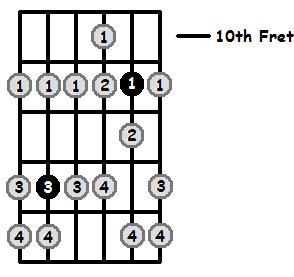
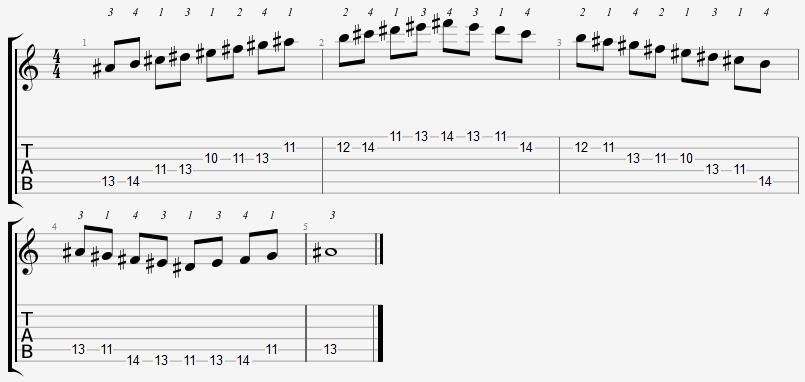
That covers the 5 basic positions and the open position of A# phrygian along the guitar fretboard. For an in depth explanation of the phrygian mode, check out phrygian mode explained.
Further Reading
- A#m7 chord (A# phrygian works well over the A#m7 chord).
- F# Major scale contains the mode of A# phrygian.