‘E Aeolian’ is the 6th mode of the G major scale. The notes in E Aeolian are:
E – F# – G – A – B – C – D
If you have read the post on understanding the aeolian mode, you will know that the aeolian mode contains a ‘flat 3’, a ‘flat 6’ and a ‘flat 7’ (parallel approach).You will also know that it is the 6th mode of the major scale (derivative approach). The aeolian mode is a very commonly used mode and is also known as the ‘natural minor scale’. Let’s briefly look at how to construct E aeolian using both the parallel approach and the derivative approach.
E Aeolian Mode Using The Parallel Approach
E Major has the following notes:
E – F# – G# – A – B – C# – D#
If we ‘lower’ the 3rd note (G#), 6th note (C#) and 7th note (D#), we get the following:
E – F# – G – A – B – C – D
E Aeolian Mode Using The Derivative Approach
E is the 6th note of the G major scale:
G – A – B – C – D – E – F#
If we play the G major scale and start on the 6th note we get the following:
E – F# – G – A – B – C – D
Let’s look at the E aeolian mode in the different positions on the guitar fretboard:
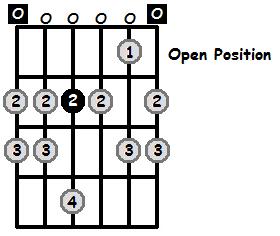
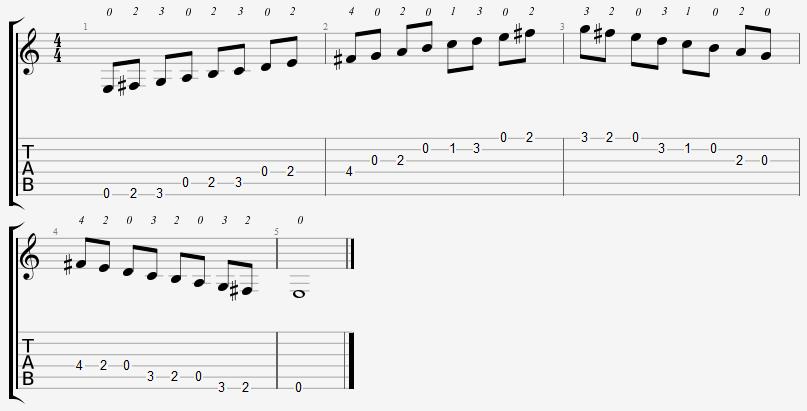
E Aeolian in the Open Position
Firstly, let’s look at the open position:
E Aeolian CAGED Positions
Now let’s look at E aeolian in the 5 different CAGED positions along the fretboard.
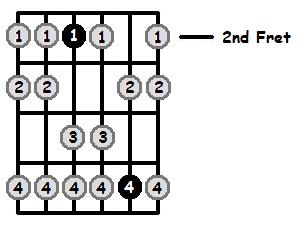
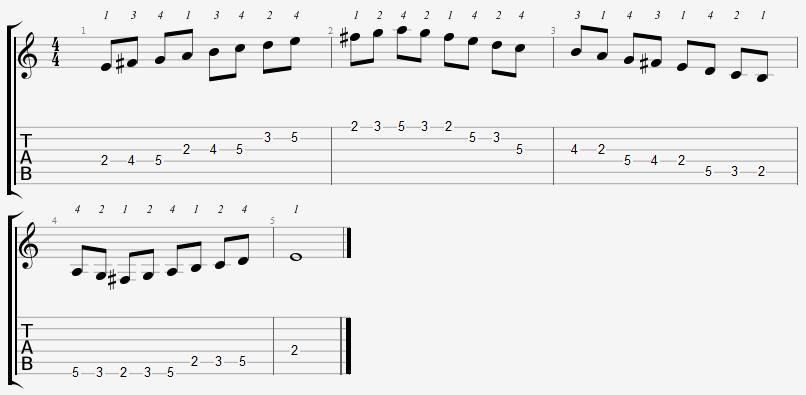
E Aeolian 2nd Position (Lowest Fret is 2)
E Aeolian 3rd Position (Lowest Fret is 3)
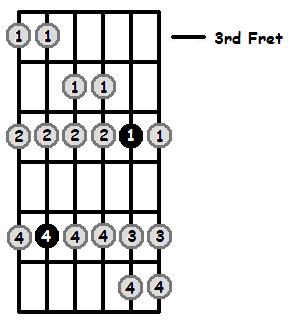
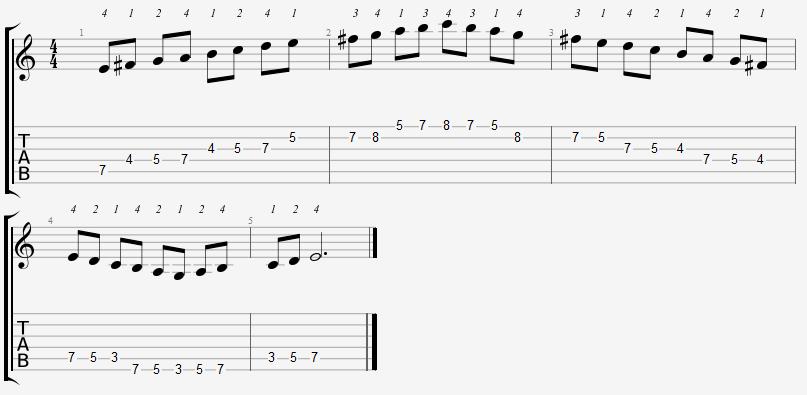
E Aeolian 7th Position (Lowest Fret is 7)
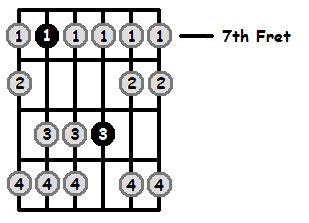
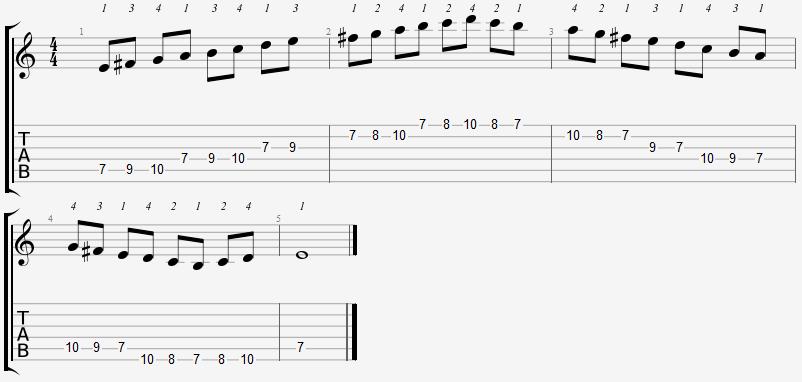
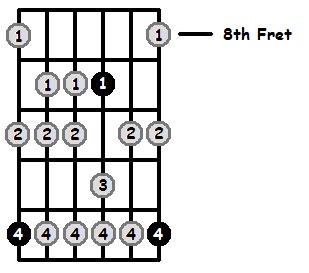
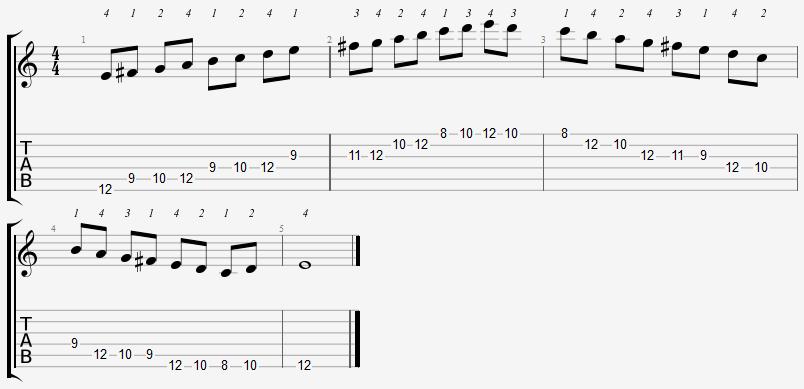
E Aeolian 8th Position (Lowest Fret is 8)
E Aeolian 11th Position (Lowest Fret is 11)
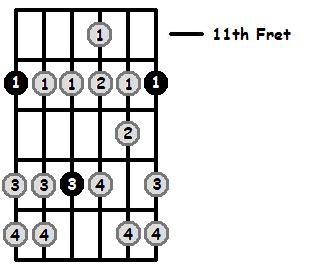
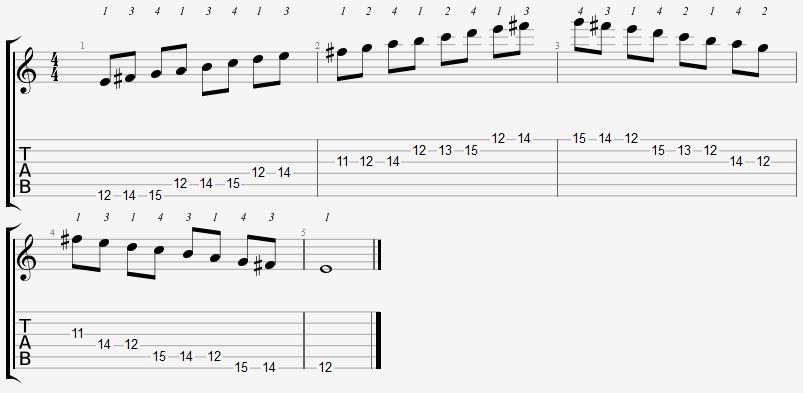
That covers the 5 basic positions and the open position of Db aeolian along the guitar fretboard. For an in depth explanation of the aeolian mode, check out aeolian mode explained.
Further Reading
- Em chord (E Aeolian works well over this chord)
- Em7 chord (E Aeolian works well over this chord)
- G Major scale is the relative Major of E minor